

Busbar
Why Choose Us
Wuxi GRT Technology Co., LTD is an import and export company specializing in gold product technology development and services.
Products Sell Well
We have already cooperated with companies from the United States, Russia, Italy, Germany and other countries.
Quality Assurance
The company passed SGS audit and obtained ISO 9001 quality management system certification, with an annual production capacity of 6GW.
Quality Services
Our team is committed to delivering high-quality services to our clients. We use the latest technologies and tools to ensure that our services exceed your expectations.
Wide Product Range
Products cover various types of pv support structural type "C", "Z" type, "Ω" type, "U" shaped openings profiles, square,polygon, prototype silent profile and stent stampings, assembly parts and so on.
Advantages of Busbar
Space Saving:Busbar systems have compact design and therefore require lesser space as compared to cable systems. The attribute of compactness enables the tightly packed in conductors to remain reliable and isolated.
Flexible Nature: The modular design of the busbar ensures that they can be fitted into any structure. Moreover, relocation is easily possible without incurring large expenditure.
Superior Resistance:Superior resistance is offered by busbar compared to cables and this is proved more so in short circuit testing. The presence of a thin flat tire endows the busbar with lesser density levels helping in optimal dissemination of the density of current.
Economical in Long Run:The configurable system and ease of installation ensure the busbar's competitiveness as costs of material handling and assembly time are greatly reduced.
Future-Proofing: Modifications can be made in the future as per client requirements without the need for additional cables which can prove expensive and time consuming.
Quick & Safe Installation: Specialized electricians are needed for the installation of cables while about 10 meters of busbar can be installed by the installers with great ease at a time without the need for special tools. The accessories, joints and lengths are just screwed or bolted with one another.
Role of Heat Shrink Products: There are some components that play a vital role in these busbar systems and they are the heat shrink products such as heat shrink tubes, busbar tubes and so on. These products offer superior insulation and consistent performance even at constant high operating temperatures.
-
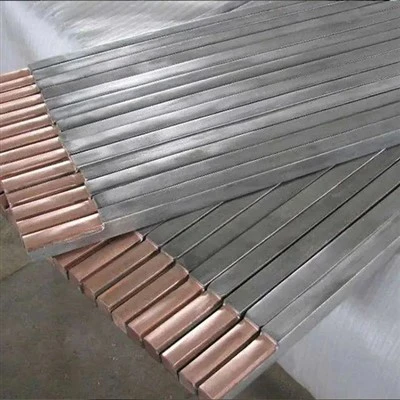 Flexible Busbar For InvertersFlexible busbars for inverters are engineered to replace rigid copper bars and complex cable assemblies inside high-power power electronics.Add to Inquiry
 -
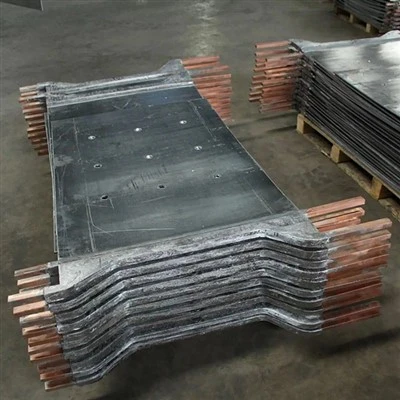 Tinned Copper Flexible BusbarTinned Copper Flexible Busbars are designed for electrical systems that require high current capacity, installation flexibility, and long-term reliability.Add to Inquiry
 -
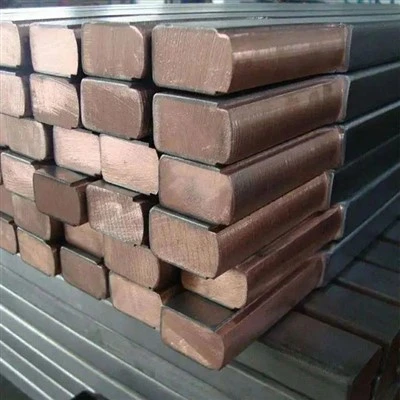 EV Battery Pack Flexible BusbarEV Battery Pack Flexible Busbars are engineered to deliver reliable electrical connections between battery cells, modules, and high-voltage components.Add to Inquiry
 -
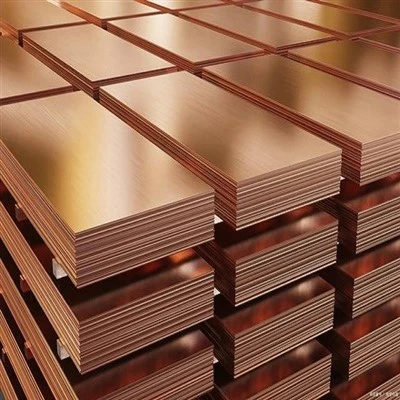 Insulated Flexible Copper BusbarInsulated Flexible Copper Busbars are engineered for high-current electrical connections where rigid busbars or complex cable harnesses are impractical.Add to Inquiry
 -
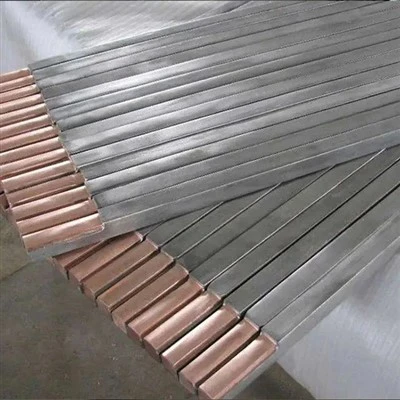 Braided Copper Flexible BusbarIn Europe and North America, power component procurement decisions are driven by strict engineering reliability rather than generic product claims.Add to Inquiry
 -
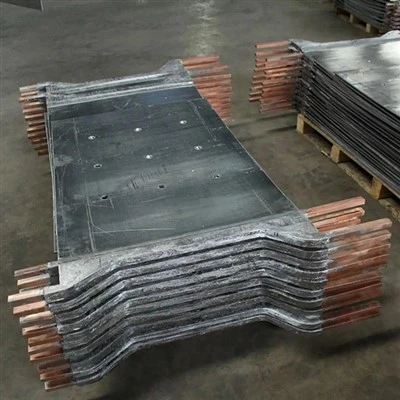 Copper Foil Flexible BusbarsCopper Foil Flexible Busbar is a high-current electrical interconnect engineered from stacked high-purity T2/C11000 copper foils (copper content ≥ 99.90%).Add to Inquiry
 -
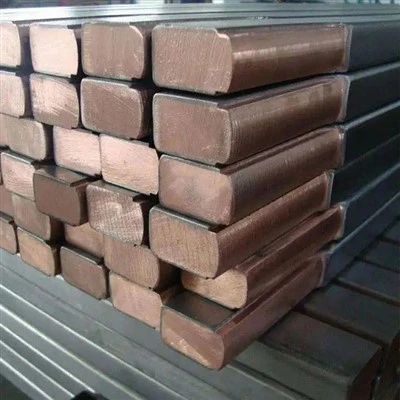 High-Voltage Custom Laminated BusbarOur Custom High-Voltage Laminated Busbars are engineered as space-saving, ultra-low inductance power distribution solutions for high-current and high-voltage applications.Add to Inquiry
 -
 Low-Inductance Laminated BusbarFor power electronics engineers and procurement teams, the critical question is not just what the product is .Add to Inquiry
 -
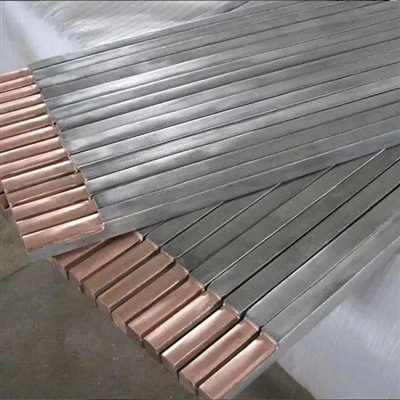 Laminated Busbar For Solar InvertersOur laminated busbars are engineered specifically for high-voltage DC-link and power conversion circuits in photovoltaic inverters and Energy Storage Systems (ESS).Add to Inquiry
 -
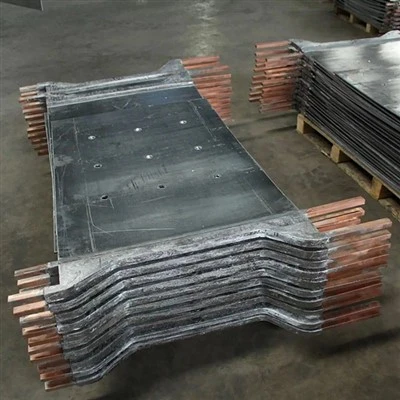 Laminated Busbar For IGBT ModulesIn modern IGBT and SiC inverter design, the critical bottleneck is not pure current capacity, but managing fast switching behavior under high dv/dt conditions.Add to Inquiry
 -
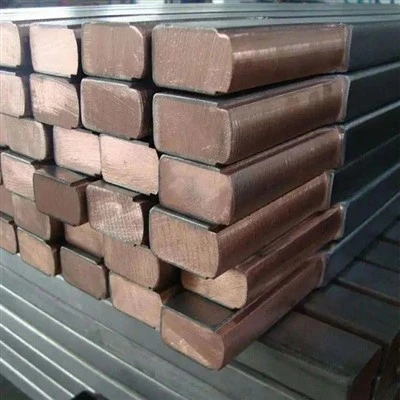 Laminated Busbar For Energy Storage SystemsLaminated busbars are custom-engineered, multi-layer power distribution components designed for high-current, high-voltage DC interconnection.Add to Inquiry
 -
 Laminated Busbar For EV InvertersLaminated busbars designed for EV traction inverters provide a compact, ultra-low-inductance, and highly reliable power connection solution.Add to Inquiry


Applications of Busbar
Institutions
Educational institutions, office buildings, and other large facilities use busbars for efficient power distribution across the premises. They help manage the diverse power requirements of different sections, from classrooms and offices to cafeterias and labs.
Power Plants
In power plants, busbars are used to distribute the generated power to the transformers, which then transmit the electricity to the grid.
Substations
Substations are intermediary points in the power grid where voltage levels are transformed from high to low or vice versa. Busbars in substations help distribute power to various feeders.
Metros and Railways
In transportation systems like metros and railways, busbars are used in power substations to distribute electricity to the tracks and trains.
Data Centers
In data centres, busbars are used to distribute power to various servers and other equipment. They offer a flexible and efficient solution for managing the high power requirements of these facilities.
Hospitals
Busbars in hospitals ensure reliable and efficient power distribution to all areas, including critical ones like operating rooms and intensive care units.
Apartments
In residential buildings, busbars are used in the main distribution board to distribute power to individual apartments or sections of the building.
Types of Busbar
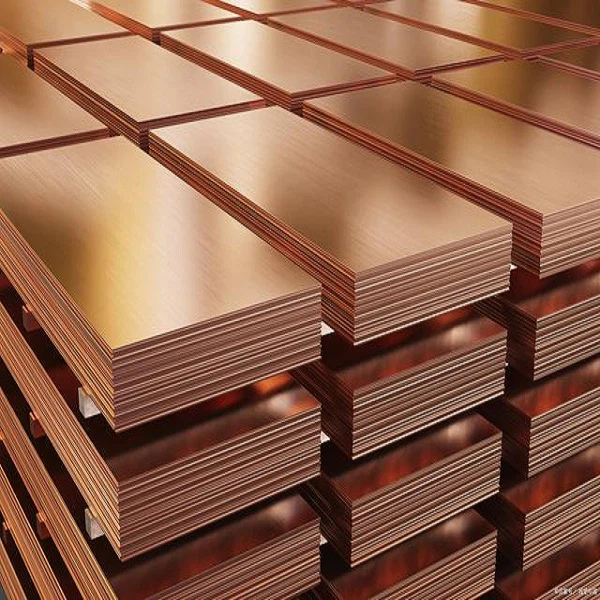



Single bus-bar System
As the name itself indicates, that a single bus-bar is used in this system. To the same single bus-bar few incoming and outgoing line are connected.
Double Bus-bar System
In case of double bus-bar system, low voltage and high voltage bus-bars are duplicated. Among the two, any one of the bus-bar sections can be used as desired.
Ring Bus-bar System
In this type of arrangement, two circuit breakers serve on one line. This ring bus-bar system has the advantage that there are always two parallel paths to the circuit and failure of one path does not interrupt the service completely.
Sectionalized Double Busbar Arrangement
An auxiliary busbar is attached to a sectionalized main busbar in this arrangement. You can disconnect the sections using isolators in case of a faulty connection to enjoy uninterrupted current flow.
A Half Breaker Arrangement
This type has three circuit breakers for two circuits, one and a half breakers for each circuit. You can install this busbar arrangement in large power stations.
Ring Main Arrangement
You can create a loop with your existing busbars. All you have to do is to connect the busbar end back to the starting point. This makes dual supply paths available for your electrical system and minimizes the shutdown time due to faulty sections.
Mesh Arrangements
The mesh busbar arrangement is particularly suitable for large substations with numerous circuits. Here, the bars form a mesh and circuit breakers are installed in the line to offer protection against the faulty sections.
Certificate


Production Equipment


Our Factory


Frequently Asked Questions
We're well-known as one of the leading busbar manufacturers and suppliers in China. Please feel free to buy high quality busbar made in China here from our factory. For price consultation, contact us.
telecommunication busbar, busbar insulation resistance testing, heat resistant busbar