

Product Overview
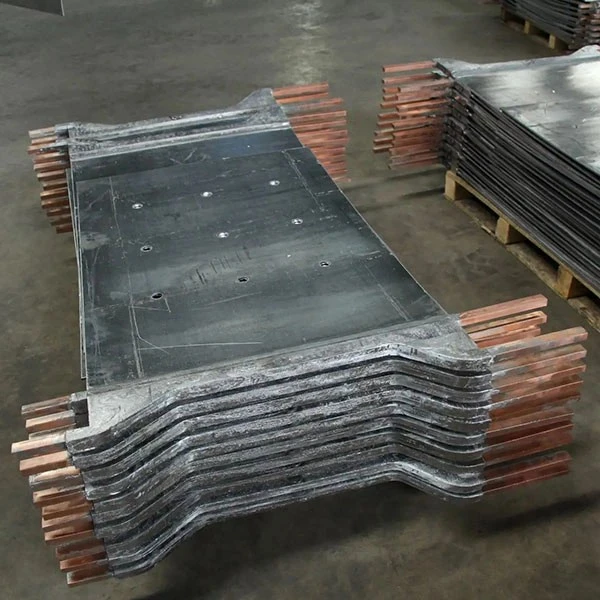
Copper Foil Flexible Busbar is a high-current electrical interconnect engineered from stacked high-purity T2/C11000 copper foils (copper content ≥ 99.90%). It is purpose-built for demanding power electronics where rigid busbars fail to accommodate structural vibrations, thermal expansion, or assembly misalignments.
Unlike solid copper bars, the multi-layer laminated foil structure provides controlled, multi-directional flexibility while maintaining excellent electrical conductivity, low contact resistance, and optimized thermal dissipation in compact layouts.
Industry Challenges Solved at System Level
In Electric Vehicles (EV), Energy Storage Systems (ESS), and industrial inverter architectures, rigid connections are highly susceptible to mechanical and thermal fatigue. This component is strategically engineered to eliminate common field failures:
Terminal Loosening & Joint Fatigue
Absorbs continuous micro-vibrations to prevent mechanical loosening or cracking at welded studs and threaded terminals.
Thermal Expansion Stress
Safely compensates for dimensional changes caused by rapid heating/cooling cycles during high-rate charging and discharging.
Assembly Tolerance Issues
Provides physical compliance to easily absorb structural misalignments in modular battery pack and rack integrations.
Wiring Complexity
Eliminates bulky cable routing, allowing for clean, space-saving layouts in high-density power electronics.
Electrical & Mechanical Performance Advantages
For engineering and procurement teams, operational consistency under continuous load is critical. Our busbars deliver verified performance parameters:
Uniform Current Distribution: The multi-layer foil geometry minimizes the skin effect, distributing current evenly across all layers to mitigate localized hot spots.
Low-Resistance Power Path: Molecular diffusion welding or heavy-duty press-welding creates solid, low-resistance terminal ends to minimize voltage drop and energy loss.
Excellent Structural Flexibility: The multi-layered mid-section isolates mechanical movement, ensuring stress is not transferred to sensitive battery cells or silicon components.
Typical Applications
Our copper foil flexible busbars are widely deployed in systems requiring zero-downtime reliability:
Electric Vehicles
EV/PHEV battery pack cell-to-cell and module-to-module interconnects.
01
Energy Storage Systems (ESS)
Utility-scale, commercial, and residential battery storage racks.
02
Power Electronics
Internal DC/AC inverter, converter, and transformer bus connections.
03
Charging Infrastructure
EV ultra-fast charging stations and Power Distribution Units (PDU).
04
Industrial Power
High-capacity UPS systems, data center power distribution, and renewable energy (solar/wind) conversion systems.
05
Custom Engineering & DFM Capabilities
Recognizing that most OEM applications require tailored dimensions, we provide comprehensive design-for-manufacturing (DFM) adaptation based on your technical drawings:
Layering & Thickness Configuration: Customized foil thickness (typically 0.1mm to 0.5mm per layer) and total cross-section to meet target ampacity.
Geometry & Tooling: Custom 2D/3D bending, forming, and multi-tier routing configuration.
Terminal Customization: Tailored hole punch patterns, slot positions, and press-welded or riveted solid ends for optimized contact pressure.
Advanced Surface Finishing: Industrial-grade tin, nickel, or silver plating to guarantee superior long-term corrosion and oxidation resistance.
Specialized Insulation: High-durability PET film, liquid epoxy coating, or flame-retardant heat-shrink tubing in standard industry color codings.
Manufacturing Excellence & Quality Control
To ensure a zero-defect supply chain for Tier 1 and OEM customers, every production batch undergoes stringent, traceable quality control:
Precision Fabrication
Automated burr-free cutting and clean-room stacking alignment to avoid internal friction or dielectric breakdown.
100% Core Electrical Testing
Verification of electrical resistance, conductivity, and interface efficiency across the welded terminals.
Dielectric & Safety Testing
High-voltage insulation testing and dielectric strength validation to ensure compliance with operator safety standards.
Mechanical Validation
Routine testing for mechanical fatigue, salt spray corrosion resistance, and vibration tolerance to simulate extended field life.
Global Certifications & Supply Capability
We streamline your supplier qualification process with fully compliant manufacturing and global logistics support:
Quality Framework: Production certified under IATF 16949 (Automotive Quality Management) and ISO 9001.
Environmental & Safety Standards: 100% compliant with RoHS and REACH directives. Insulation options meet UL 94 V-0 self-extinguishing ratings.
OEM Supply Readiness: High-volume automated production lines with traceable documentation (including Mill Test Certificates and inspection reports).
Export-Ready Packaging: Anti-oxidation and moisture-proof vacuum packaging optimized for global transit.
FAQ
Q: When should I use copper foil flexible busbar instead of rigid busbar?
A: When your system involves vibration, thermal expansion, or compact assembly space, flexible busbars reduce mechanical stress and improve long-term reliability.
Q: Can it handle high current like traditional copper bars?
A: Yes. Current capacity depends on copper cross-section design. Properly engineered structures can support high-current EV and ESS applications.
Q: What is the main failure risk it helps reduce?
A: It reduces joint fatigue failure caused by vibration and thermal cycling, which are common issues in rigid busbar systems.
Q: Can you design based on my battery pack layout?
A: Yes. We provide OEM customization based on 2D/3D drawings or electrical design requirements.
Q: What insulation options are available?
A: PET film, epoxy coating, heat-shrink tubing, or multi-layer dielectric structures depending on voltage level and safety requirements.
Q: Is it suitable for EV battery modules?
A: Yes. It is widely used in EV battery packs due to its vibration resistance and compact installation advantages.
Q: How do you ensure consistency in mass production?
A: We control copper thickness, stacking alignment, resistance value, and mechanical tolerance through standardized production and inspection processes.
Q: Do you support prototypes before mass production?
A: Yes. Prototype samples are available for electrical and mechanical validation before tooling and bulk production.
Hot Tags: copper foil flexible busbars, China copper foil flexible busbars manufacturers, suppliers, factory, aluminum busbar, commercial building busbar, energy saving busbar, maintenance free busbar, optimal busbar performance, Stepped Switchboard Copper Busbar System


