

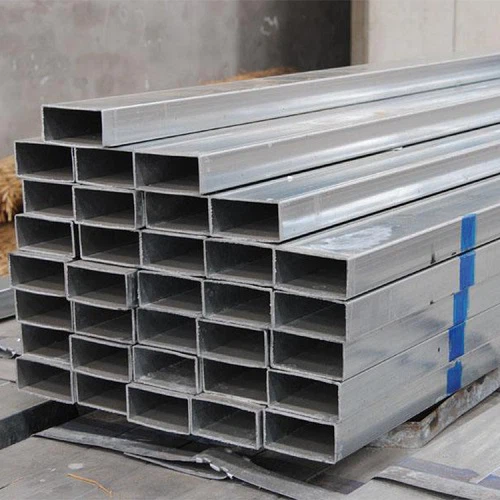
When it comes to construction, engineering, or any project that requires sturdy structural support, hollow square steel tubes are often a top choice. As a leading supplier of Hollow Square Steel Tube, I've had the privilege of working with these versatile materials extensively. In this blog post, I'll delve into the concept of stiffness in hollow square steel tubes, exploring what it means, how it's calculated, and why it matters in various applications.
Understanding Stiffness
Stiffness, in the context of materials science and engineering, refers to the ability of a structure to resist deformation under an applied load. In simpler terms, it's a measure of how much a material can withstand bending, stretching, or compressing forces without changing its shape significantly. For hollow square steel tubes, stiffness is a crucial property that determines their performance in different scenarios.
The stiffness of a hollow square steel tube depends on several factors, including its dimensions, material properties, and the type of loading it experiences. Let's take a closer look at each of these factors.
Dimensions
The dimensions of a hollow square steel tube play a significant role in determining its stiffness. The most important dimensions to consider are the outer width (b), outer height (h), wall thickness (t), and length (L) of the tube. Generally, a tube with a larger cross-sectional area and thicker walls will be stiffer than one with a smaller cross-sectional area and thinner walls.
For example, a hollow square steel tube with an outer width of 100 mm, an outer height of 100 mm, and a wall thickness of 5 mm will be stiffer than a tube with an outer width of 50 mm, an outer height of 50 mm, and a wall thickness of 2 mm. This is because the larger tube has a greater cross-sectional area, which provides more material to resist deformation.
Material Properties
The material properties of the steel used in the tube also affect its stiffness. The most common material for hollow square steel tubes is carbon steel, which has excellent strength and stiffness properties. However, the specific grade of carbon steel used can vary, and different grades may have different mechanical properties.
For instance, a tube made from a high-strength low-alloy (HSLA) steel will generally be stiffer than one made from a standard carbon steel. HSLA steels are designed to have higher strength and better corrosion resistance than standard carbon steels, making them ideal for applications where stiffness and durability are critical.
Type of Loading
The type of loading that a hollow square steel tube experiences also influences its stiffness. There are three main types of loading: axial loading, bending loading, and torsional loading.
- Axial Loading: Axial loading occurs when a force is applied along the longitudinal axis of the tube. In this case, the tube is either compressed or stretched. The stiffness of a tube under axial loading is determined by its cross-sectional area and the modulus of elasticity of the steel.
- Bending Loading: Bending loading occurs when a force is applied perpendicular to the longitudinal axis of the tube, causing it to bend. The stiffness of a tube under bending loading is determined by its moment of inertia and the modulus of elasticity of the steel.
- Torsional Loading: Torsional loading occurs when a torque is applied to the tube, causing it to twist. The stiffness of a tube under torsional loading is determined by its polar moment of inertia and the shear modulus of the steel.
Calculating Stiffness
The stiffness of a hollow square steel tube can be calculated using various formulas, depending on the type of loading. Here are some of the most common formulas used to calculate stiffness:
Axial Stiffness
The axial stiffness (k) of a hollow square steel tube under axial loading can be calculated using the following formula:
[ k = \frac{A E}{L} ]
where:
- ( A ) is the cross-sectional area of the tube
- ( E ) is the modulus of elasticity of the steel
- ( L ) is the length of the tube
Bending Stiffness
The bending stiffness (EI) of a hollow square steel tube under bending loading can be calculated using the following formula:
[ EI = E I ]
where:
- ( E ) is the modulus of elasticity of the steel
- ( I ) is the moment of inertia of the tube
The moment of inertia (I) for a hollow square tube can be calculated using the following formula:
[ I = \frac{b h^3 - (b - 2t)(h - 2t)^3}{12} ]

where:
- ( b ) is the outer width of the tube
- ( h ) is the outer height of the tube
- ( t ) is the wall thickness of the tube
Torsional Stiffness
The torsional stiffness (GJ) of a hollow square steel tube under torsional loading can be calculated using the following formula:
[ GJ = G J ]
where:
- ( G ) is the shear modulus of the steel
- ( J ) is the polar moment of inertia of the tube
The polar moment of inertia (J) for a hollow square tube can be calculated using the following formula:
[ J = \frac{b h (b^2 + h^2) - (b - 2t)(h - 2t) ((b - 2t)^2 + (h - 2t)^2)}{12} ]
Importance of Stiffness in Applications
The stiffness of a hollow square steel tube is crucial in various applications, as it directly affects the performance and safety of the structure. Here are some examples of applications where stiffness is particularly important:
Construction
In construction, hollow square steel tubes are commonly used as structural members in buildings, bridges, and other structures. The stiffness of these tubes is essential to ensure that the structure can withstand the loads and forces it will experience during its service life. For example, in a high-rise building, the columns made of hollow square steel tubes need to be stiff enough to support the weight of the upper floors and resist wind and seismic forces.
Machinery and Equipment
Hollow square steel tubes are also widely used in the manufacturing of machinery and equipment. In these applications, stiffness is crucial to ensure the accuracy and stability of the machine. For instance, in a machine tool, the frame made of hollow square steel tubes needs to be stiff enough to prevent vibration and deflection during operation, which can affect the quality of the machining process.
Transportation
In the transportation industry, hollow square steel tubes are used in the construction of vehicles, such as trucks, buses, and trains. The stiffness of these tubes is important to ensure the safety and comfort of the passengers and the durability of the vehicle. For example, in a truck chassis, the frame made of hollow square steel tubes needs to be stiff enough to support the weight of the cargo and resist the forces generated during driving.
Our Product Offerings
As a leading supplier of Hollow Square Steel Tube, we offer a wide range of products to meet the diverse needs of our customers. Our tubes are available in various sizes, wall thicknesses, and grades of steel, ensuring that you can find the perfect solution for your project.
In addition to Hollow Square Steel Tube, we also offer Rectangular Steel Tubing, Hot Rolled Square Tube, Seamless Square Tube, and Galvanized Rectangular Tube. Our products are manufactured using the latest technology and adhere to strict quality control standards, ensuring that they meet or exceed the requirements of our customers.
Conclusion
In conclusion, the stiffness of a hollow square steel tube is a critical property that determines its performance in various applications. By understanding the factors that affect stiffness and how to calculate it, you can make informed decisions when selecting the right tube for your project. As a trusted supplier of Hollow Square Steel Tube and other related products, we are committed to providing our customers with high-quality materials and excellent customer service. If you have any questions or need assistance with your project, please don't hesitate to contact us for a consultation and procurement discussion.


