

High-Performance Electrical Interconnection for Next-Gen EV Architectures
EV Battery Pack Laminated Busbar is engineered for high-voltage electric vehicle battery systems where electrical stability, compact packaging, and thermal reliability directly dictate vehicle range and safety.
By utilizing a multi-layer conductive structure with precisely controlled interleaved insulation, laminated busbars eliminate the performance bottlenecks of traditional wire harnesses, delivering superior electrical consistency and robust EMI mitigation in high-frequency EV switching environments.
Technical Comparison: Overcoming Traditional Wiring Limits
Modern EV battery platforms operate under extreme current loads and fast-charging transients. Traditional heavy-gauge cables or single-layer busbars frequently introduce high parasitic inductance, voltage spikes, and localized thermal stress. Laminated busbars solve these challenges by minimizing loop area and balancing current distribution.
|
Performance Feature |
Laminated Busbar System |
Traditional Cable Harness |
|
Parasitic Inductance |
Ultra-low (optimized loop geometry minimizes voltage spikes) |
High (large loop area, risks damaging switching components) |
|
Space Utilization |
Low-profile, integrated & ultra-compact layout |
Bulky, requires complex routing and significant spacing |
|
Thermal Performance |
Uniform heat dissipation across broad conductive surfaces |
Localized hot spots concentrated within dense cable bundles |
|
Assembly Efficiency |
Error-proof, standardized, and highly friendly to automation |
Manual routing, labor-intensive, and higher defect risks |
|
Vibration Resistance |
High structural integrity (bonded solid-state architecture) |
Prone to friction, insulation wear, and shifting over time |
Key Engineering Advantages
Advanced Electrical Performance & EMI Control
• Inductance Suppression: Minimized loop geometry suppresses dangerous voltage overshoots, protecting sensitive power electronics during fast transient switching.
• Optimized Current Balancing: Ensures uniform current density across battery cells, preventing localized overcharging and premature cell degradation.
• Active EMI Shielding: Effectively cancels out electromagnetic interference in high-frequency EV powertrain and inverter circuits.
• Voltage Architecture: Fully compatible with standard 400V, high-efficiency 800V, and next-generation 1200V powertrain systems.
Enhanced Thermal Management
Eliminates the "bundle effect" of cables by distributing thermal energy evenly across the conductive plates.
Sustains continuous, uninterrupted performance under high dynamic driving loads and heavy DC fast-charging cycles.
Materials & Technical Specifications
Every laminated busbar is tailored to the exact mechanical and electrical boundaries of the client's battery enclosure.
Conductive Layers
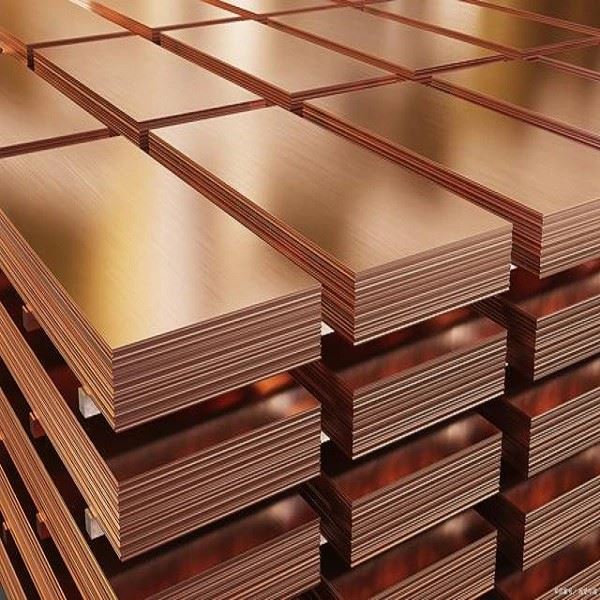
• Copper (Cu): High-purity T2/C11000 for maximum conductivity and efficiency.
• Aluminum (Al): 1050/1060 series for light-weighting and mass optimization
Insulation Systems
• Materials: Polyimide film, PET, or custom Epoxy coating with dielectric strength up to 10–20 kV/mm.
• Flame Retardancy: Fully compliant with UL 94 V-0 self-extinguishing automotive requirements.
• Compliance: 100% certified to RoHS and REACH directives.
Global Application Areas
Our laminated busbar solutions are widely deployed across zero-emission transport and infrastructure sectors:
Passenger EVs (BEV/PHEV): Cell-to-cell, module-to-module, and pack-to-inverter main power distribution.
Commercial E-Mobility: High-voltage DC busbars for electric buses, heavy-duty logistics trucks, and material handling equipment.
Energy Storage Systems (ESS): High-density utility-scale and industrial battery energy storage enclosures.
APQP Framework: Engineering Support & Quality Control
From initial concept to Start of Production (SOP), we follow strict automotive product development lifecycles aligned with IATF 16949 quality management standards.
Customization & DFM Services
• Co-Design Integration: 2D/3D layout optimization, mechanical constraint adaptation, and thermal-electrical simulation support.
• Rapid Prototyping: Accelerated turnaround for functional engineering samples to secure validation timelines.
• Scalability: Seamless transition from initial prototyping and documentation to high-volume automated production lines.
Rigorous Validation Testing
To ensure flawless performance under harsh, real-world automotive environments, 100% of our products undergo a strict testing regime:
• Electrical: Hi-pot testing (Dielectric withstand voltage), insulation resistance, and continuity checks.
• Environmental: Accelerated thermal cycling, environmental aging, and mechanical vibration/shock profiling.
• Dimensional: Critical-to-quality (CTQ) dimensional validation via 3D coordinate measuring machines (CMM).
FAQ
Q: What is a laminated busbar used for in EV battery packs?
A: It provides a low-inductance electrical connection between battery modules and power electronics, improving system stability and efficiency.
Q: Can laminated busbars handle high current in EV applications?
A: Yes. Current capacity depends on conductor material, thickness, and design layout, and they are widely used in high-power EV systems.
Q: What materials are used in laminated busbars?
A: Common materials include copper or aluminum conductors and insulation layers such as polyimide film or epoxy-based composites.
Q: Why are laminated busbars better than cable harnesses?
A: They reduce inductance, improve electrical stability, simplify assembly, and enhance performance in compact EV battery systems.
Q: Can laminated busbars be customized for different EV battery designs?
A: Yes. They are fully customizable based on layout, voltage level, current requirements, and enclosure space.
Q: How do laminated busbars improve safety?
A: They reduce voltage spikes and ensure stable insulation between conductive layers, lowering the risk of electrical faults.
Q: Are they suitable for fast-charging systems?
A: Yes. Their low-inductance structure supports stable performance under fast transient charging conditions.
Q: Do you support OEM/ODM projects?
A: Yes. We provide full OEM/ODM engineering support from design optimization to mass production.
Hot Tags: ev battery pack laminated busbar, China ev battery pack laminated busbar manufacturers, suppliers, factory, battery busbar, busbar brackets, busbar enclosure, corrosion resistant busbar, expandable busbar, high voltage busbar


