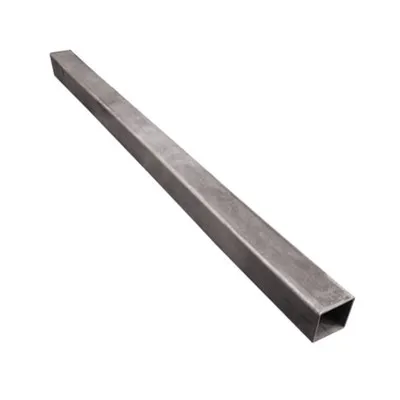
When it comes to bending square tubes, one of the most common challenges is preventing flattening. As a square tube supplier, I understand the importance of maintaining the structural integrity and shape of the tubes during the bending process. In this blog post, I will discuss several techniques that can be used to prevent flattening when bending square tubes.
1. Mandrel Bending
Mandrel bending is a highly effective technique for preventing tube flattening. A mandrel is a solid rod or tube that is inserted into the square tube during the bending process. The mandrel supports the inner walls of the tube, preventing them from collapsing or flattening under the pressure of bending.
There are different types of mandrels available, including solid mandrels, segmented mandrels, and ball mandrels. Solid mandrels are the simplest type and are suitable for less complex bends. Segmented mandrels consist of multiple segments that can flex and conform to the shape of the bend, providing better support for more complex bends. Ball mandrels are made up of a series of balls that are connected by a rod, allowing for even more flexibility and support.

When using a mandrel, it is important to choose the right size and type for the specific application. The mandrel should fit snugly inside the tube to provide adequate support, but not be so tight that it causes damage to the tube. Additionally, the mandrel should be lubricated to reduce friction and prevent damage to the tube's inner surface.
2. Fill the Tube with a Support Material
Another technique for preventing tube flattening is to fill the tube with a support material. This can be done using a variety of materials, such as sand, lead, or low-melting-point alloys. The support material fills the tube and provides internal support during the bending process, preventing the tube from collapsing or flattening.
Sand is a commonly used support material because it is inexpensive and readily available. To use sand, the tube is filled with dry sand and then plugged at both ends. The sand provides a solid support structure that helps to maintain the shape of the tube during bending. However, sand can be difficult to remove from the tube after bending, and it may not provide as much support as other materials.
Lead is another option for filling the tube. Lead is a dense material that provides excellent support and can be easily removed from the tube after bending. However, lead is heavy and can be expensive, so it may not be the most cost-effective option for all applications.
Low-melting-point alloys are also a popular choice for filling tubes. These alloys can be melted and poured into the tube, where they solidify and provide support during bending. After bending, the alloy can be melted again and removed from the tube. Low-melting-point alloys offer a good balance of support and ease of removal, but they can be more expensive than sand.
3. Use a Bending Die with a Proper Radius
The design of the bending die plays a crucial role in preventing tube flattening. A bending die with a proper radius can help to distribute the bending force evenly across the tube, reducing the risk of flattening.
When selecting a bending die, it is important to choose a die with a radius that is appropriate for the size and thickness of the tube. A die with a too-small radius can cause the tube to flatten or kink, while a die with a too-large radius may not provide enough bending force to achieve the desired bend angle.
In addition to the radius, the shape of the bending die can also affect the quality of the bend. A die with a smooth, rounded surface can help to prevent damage to the tube's outer surface and reduce the risk of flattening.
4. Control the Bending Speed and Force
The speed and force at which the tube is bent can also have an impact on the risk of flattening. Bending the tube too quickly or with too much force can cause the tube to flatten or kink.
To prevent flattening, it is important to control the bending speed and force carefully. This can be done using a bending machine that allows for precise control of the bending process. The machine should be set to a speed and force that is appropriate for the size and thickness of the tube.
In addition to controlling the speed and force, it is also important to ensure that the tube is properly aligned and supported during the bending process. This can help to prevent the tube from shifting or moving during bending, which can increase the risk of flattening.
5. Preheat the Tube
Preheating the tube before bending can help to reduce the risk of flattening. When the tube is heated, it becomes more malleable and easier to bend, which can reduce the amount of force required to achieve the desired bend angle.
To preheat the tube, it can be heated using a torch or an induction heater. The tube should be heated to a temperature that is appropriate for the material and thickness of the tube. However, it is important to be careful not to overheat the tube, as this can cause the material to become brittle and increase the risk of cracking.
6. Choose the Right Material
The choice of material can also affect the risk of flattening when bending square tubes. Some materials are more prone to flattening than others, so it is important to choose a material that is suitable for the specific application.
For example, seamless steel square tubing is a popular choice for applications where high strength and durability are required. Seamless tubes have a uniform wall thickness and are less likely to flatten during bending compared to welded tubes.
Mild steel square hollow section is another common material for square tubes. Mild steel is relatively easy to bend and has good formability, but it may be more prone to flattening compared to other materials.
Seamless Square Tube is often preferred for applications where a high-quality finish and precise dimensions are required. Seamless tubes are produced using a seamless manufacturing process, which results in a smooth and uniform surface.
Conclusion
Preventing flattening when bending square tubes is essential for maintaining the structural integrity and shape of the tubes. By using techniques such as mandrel bending, filling the tube with a support material, using a bending die with a proper radius, controlling the bending speed and force, preheating the tube, and choosing the right material, it is possible to minimize the risk of flattening and achieve high-quality bends.
As a square tube supplier, I am committed to providing high-quality square tubes and offering technical support to help our customers achieve the best results in their bending applications. If you are interested in purchasing square tubes or have any questions about the bending process, please feel free to contact us for further information and to discuss your specific requirements.