The power factor of a busbar is a critical concept in the electrical power system, especially for those involved in the supply and use of busbars. As a busbar supplier, understanding and being able to explain the power factor of a busbar is essential for providing high - quality products and services to our customers.
Understanding the Basics of Power Factor
Power factor is a measure of how effectively electrical power is being used in an AC (alternating current) circuit. In an ideal AC circuit, the voltage and current waveforms are in perfect alignment, and all the electrical power is used for useful work, such as running motors, lighting, or powering electronic devices. This is represented by a power factor of 1 (or 100%). However, in real - world scenarios, the voltage and current waveforms often get out of phase due to the presence of inductive or capacitive loads.
Inductive loads, such as motors, transformers, and solenoids, cause the current to lag behind the voltage. Capacitive loads, on the other hand, make the current lead the voltage. When there is a phase difference between voltage and current, not all of the electrical power supplied is used for useful work. Some of the power is wasted in the form of reactive power, which oscillates between the source and the load without performing any actual work.
The power factor (PF) is defined as the ratio of real power (P), which is the power used for useful work, to apparent power (S). Mathematically, it is expressed as (PF=\frac{P}{S}), where apparent power (S = VI) (voltage times current) and real power (P = VI\cos\theta), with (\theta) being the phase angle between the voltage and current waveforms. So, (PF=\cos\theta).
Power Factor in the Context of Busbars
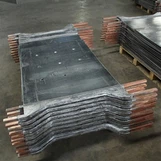
Busbars are used to distribute electrical power within a switchgear, panel, or electrical system. They act as a common connection point for multiple electrical circuits. The power factor of a busbar system is influenced by the loads connected to it.
If the majority of the loads connected to the busbar are inductive, such as in an industrial setting with numerous motors, the power factor of the busbar system will be lagging. A low power factor in a busbar system has several implications. Firstly, it increases the current flowing through the busbar for a given amount of real power. Since the losses in a busbar are proportional to the square of the current ((P_{loss}=I^{2}R), where (R) is the resistance of the busbar), a low power factor leads to higher power losses in the busbar. These losses result in increased energy consumption and higher operating costs.


Secondly, a low - power - factor busbar system requires larger conductors to carry the same amount of real power compared to a high - power - factor system. This is because the current is higher for a given real power when the power factor is low. Larger conductors mean higher material costs and more space requirements for the busbar installation.
Improving the Power Factor of a Busbar System
As a busbar supplier, we also offer solutions to improve the power factor of busbar systems. One common method is the use of power factor correction capacitors. These capacitors are connected in parallel with the inductive loads on the busbar. Capacitive reactance ((X_{C})) is opposite in nature to inductive reactance ((X_{L})). By adding the appropriate amount of capacitance, the reactive power generated by the inductive loads can be compensated, bringing the voltage and current waveforms closer in phase and increasing the power factor.
When the power factor is improved, the current flowing through the busbar is reduced for the same amount of real power. This not only reduces the power losses in the busbar but also allows for more efficient use of the existing busbar capacity. It can also help avoid penalties imposed by utility companies for low - power - factor operation.
Our Busbar Products and Their Power - Related Features
We offer a wide range of busbars to meet different customer needs. Our MCB Copper Bar is made of high - quality copper, which has low resistance. Low resistance is crucial for minimizing power losses in the busbar, especially when dealing with high - current applications. The use of copper also ensures good conductivity, which helps in maintaining a stable electrical connection and reducing the impact of power - factor - related issues.
Our Car Battery Terminal Connectors are designed to provide a reliable connection between the battery and the electrical system in a vehicle. These connectors are engineered to handle the specific current and power requirements of automotive applications. They are made with materials that minimize resistance and ensure efficient power transfer, which is important for maintaining a good power factor in the vehicle's electrical system.
In addition, our Battery Terminal Components are suitable for various battery - powered systems. These components are designed to work in harmony with the overall electrical system to optimize power usage and reduce power losses. By providing high - quality components, we contribute to improving the power factor and overall efficiency of the battery - related electrical systems.
Importance of Selecting the Right Busbar for Power - Factor Considerations
When customers are selecting a busbar for their electrical systems, power - factor considerations should be taken into account. Different busbar materials, cross - sectional areas, and configurations can have an impact on the power factor of the overall system. For example, a busbar with a larger cross - sectional area has lower resistance, which can help reduce power losses associated with a low power factor.
The design of the busbar layout also matters. A well - designed busbar layout can minimize the inductance and capacitance effects that can lead to a poor power factor. Our team of experts can assist customers in choosing the right busbar based on their specific load characteristics, power requirements, and power - factor goals.
Case Studies: Impact of Power Factor on Busbar Performance
Let's consider an industrial factory that has a busbar system supplying power to multiple motors. Initially, the power factor of the busbar system was around 0.7. The high reactive power in the system led to significant power losses in the busbar, and the factory was facing high energy bills. After we installed power factor correction capacitors on the busbar system, the power factor was improved to 0.95.
As a result, the current flowing through the busbar was reduced by approximately 30%. The power losses in the busbar decreased significantly, and the factory saw a reduction in its monthly energy consumption. Moreover, the factory was able to utilize the existing busbar capacity more efficiently without the need for costly upgrades to larger conductors.
Contact Us for Busbar Solutions
If you are looking for high - quality busbars and solutions to optimize the power factor of your electrical systems, we are here to help. Our extensive experience in the busbar industry allows us to provide customized solutions based on your specific requirements. Whether you need a busbar for a small - scale commercial application or a large - scale industrial project, we can offer the right products and technical support.
Contact us to discuss your busbar needs and start a procurement negotiation. Our team of experts will be happy to answer your questions and provide detailed information about our products and services.
References
- Chapman, S. J. (2012). Electric Machinery Fundamentals. McGraw - Hill.
- Fitzgerald, A. E., Kingsley, C., & Umans, S. D. (2003). Electric Machinery. McGraw - Hill.
- Grover, F. W. (1973). Inductance Calculations: Working Formulas and Tables. Dover Publications.