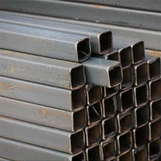
When it comes to structural applications, hollow square steel tubes are a popular choice due to their high strength-to-weight ratio, durability, and versatility. One of the critical factors to consider when selecting a hollow square steel tube for structural use is the minimum wall thickness. In this blog post, we'll delve into what determines the minimum wall thickness of a hollow square steel tube and why it matters. As a leading supplier of Hollow Square Steel Tube, I'm well - versed in these aspects and can provide valuable insights.
Factors Affecting the Minimum Wall Thickness
Load - Bearing Requirements
The primary function of a structural hollow square steel tube is to bear loads. The type and magnitude of the loads that the tube will be subjected to play a crucial role in determining the minimum wall thickness. For example, if the tube is used in a building's framework to support heavy vertical loads from floors and roofs, a thicker wall is required. In contrast, if it is used for a less - demanding application such as a handrail, a thinner wall may be sufficient.
The load can be classified into static and dynamic loads. Static loads are constant, like the weight of the structure itself. Dynamic loads, on the other hand, are variable and can include wind forces, seismic activity, or moving machinery. For structures in areas prone to high winds or earthquakes, the tube must have a thicker wall to withstand these dynamic forces without failure.
Material Properties
The material of the hollow square steel tube also affects the minimum wall thickness. Different grades of steel have different mechanical properties, such as yield strength and ultimate tensile strength. Higher - strength steels can withstand greater stresses, allowing for a thinner wall while still meeting the load - bearing requirements. For instance, a tube made of high - strength low - alloy (HSLA) steel can have a thinner wall compared to a tube made of mild steel when used in the same application.
Corrosion Resistance
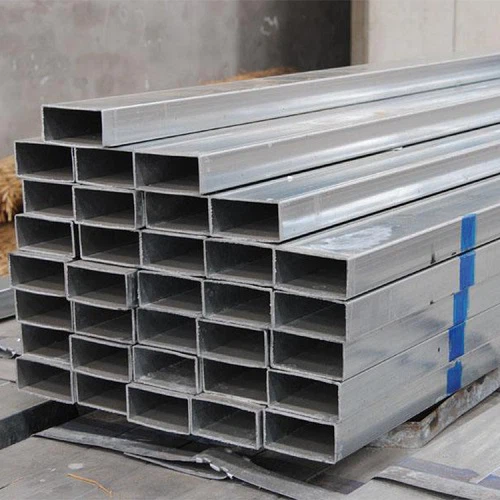
In many structural applications, the tube is exposed to the environment, which can lead to corrosion. Corrosion reduces the cross - sectional area of the tube over time, weakening its structural integrity. To combat this, tubes can be coated, such as galvanized. A Galvanized Rectangular Tube has a zinc coating that provides a protective layer against corrosion. However, even with a coating, a certain minimum wall thickness is still necessary to ensure that the tube can maintain its strength throughout its service life.
Manufacturing Processes
The manufacturing process of the hollow square steel tube can influence the minimum wall thickness. For example, Hot Rolled Square Tube is produced at high temperatures, which can result in a more uniform wall thickness and better mechanical properties compared to cold - formed tubes. The manufacturing process also affects the maximum and minimum wall thicknesses that can be achieved. Some processes may have limitations on how thin or thick the wall can be.
Industry Standards and Regulations
There are various industry standards and regulations that specify the minimum wall thickness for hollow square steel tubes used in structural applications. These standards are designed to ensure the safety and reliability of the structures. For example, in the construction industry, building codes often require that structural steel members meet certain strength and thickness requirements.
In the United States, the American Institute of Steel Construction (AISC) provides guidelines for the design and use of structural steel. These guidelines take into account factors such as load - bearing capacity, material properties, and corrosion resistance to determine the appropriate wall thickness for different applications. Similarly, in Europe, the Eurocode standards set out the requirements for structural steel design, including the minimum wall thickness for hollow sections.
Calculating the Minimum Wall Thickness
Calculating the minimum wall thickness of a hollow square steel tube is a complex process that involves engineering principles and mathematical equations. Engineers typically use structural analysis software to perform these calculations, taking into account the factors mentioned above.

The basic formula for calculating the wall thickness of a tube under axial load is based on the stress formula:
[ \sigma=\frac{P}{A} ]
where (\sigma) is the stress, (P) is the applied load, and (A) is the cross - sectional area of the tube. The cross - sectional area of a hollow square tube is given by (A = (b^2-(b - 2t)^2)), where (b) is the outer side length of the square tube and (t) is the wall thickness.
To ensure that the tube does not fail under the applied load, the stress (\sigma) must be less than the allowable stress of the material. The allowable stress is determined by the material's yield strength and a safety factor.
Importance of the Right Wall Thickness
Choosing the right wall thickness for a hollow square steel tube is crucial for several reasons. Firstly, it ensures the safety of the structure. A tube with a wall thickness that is too thin may fail under the applied loads, leading to structural collapse. On the other hand, a tube with a wall thickness that is too thick is not cost - effective, as it uses more material than necessary.
Secondly, the right wall thickness affects the durability of the tube. A tube with an appropriate wall thickness can better resist corrosion and wear, extending its service life. This is especially important in applications where the tube is exposed to harsh environments.
Our Role as a Supplier
As a supplier of Hollow Square Steel Tube, we understand the importance of providing high - quality tubes with the appropriate wall thickness. We work closely with our customers to understand their specific requirements, whether it's for a small - scale project or a large - scale construction.
We offer a wide range of hollow square steel tubes with different wall thicknesses, materials, and coatings to meet various structural needs. Our tubes are manufactured to meet or exceed industry standards, ensuring that they are safe and reliable.
Contact Us for Your Structural Steel Needs
If you're in the market for high - quality hollow square steel tubes for your structural project, we're here to help. Our team of experts can assist you in selecting the right tube with the appropriate wall thickness for your specific application. Whether you need a Galvanized Rectangular Tube for corrosion - resistant applications or a Hot Rolled Square Tube for its superior mechanical properties, we have the solutions.
Contact us today to start a conversation about your project requirements. We look forward to working with you to ensure the success of your structural project.