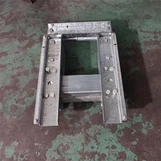
Hey there! As a busbar supplier, I often get asked about how to measure the temperature of a busbar. It's a crucial aspect, especially when it comes to ensuring the safety and efficiency of electrical systems. In this blog, I'll share some practical methods and insights on measuring busbar temperature.
First off, why is it so important to measure the temperature of a busbar? Well, busbars carry large amounts of electrical current, and as you know, when current flows through a conductor, it generates heat. If the temperature of the busbar gets too high, it can lead to a bunch of problems. For instance, it can cause the insulation around the busbar to degrade, which increases the risk of short - circuits and electrical fires. High temperatures can also reduce the lifespan of the busbar itself, leading to costly replacements.
One of the simplest ways to measure busbar temperature is by using infrared (IR) thermometers. These handy devices are really easy to use. You just point the thermometer at the busbar, and it gives you a quick reading of the surface temperature. The great thing about IR thermometers is that they're non - contact, which means you don't have to shut down the electrical system to take a measurement. This is super convenient, especially in industrial settings where downtime can be really expensive.


However, there are some limitations to using IR thermometers. They only measure the surface temperature of the busbar. Sometimes, the internal temperature of the busbar can be different from the surface temperature, especially if there's a problem with heat dissipation inside the busbar. Also, factors like dust, dirt, and the emissivity of the busbar surface can affect the accuracy of the readings.
Another method is using thermocouples. Thermocouples are sensors that generate a voltage proportional to the temperature difference between two junctions. You can attach a thermocouple directly to the busbar, which gives you a more accurate measurement of the actual temperature at the point of contact. This is useful for monitoring the temperature over a long period of time.
To install a thermocouple on a busbar, you first need to clean the surface of the busbar to ensure good contact. Then, you can use a special adhesive or a mechanical clamp to attach the thermocouple. Once it's installed, you can connect it to a temperature monitoring system, which will record and display the temperature readings.
The advantage of using thermocouples is that they provide continuous, real - time temperature data. This can be really helpful in detecting any sudden changes in temperature, which could indicate a problem with the busbar. But the installation process can be a bit tricky, and you need to make sure that the thermocouple is properly insulated to avoid any electrical interference.
For more advanced monitoring, you can use fiber - optic temperature sensors. These sensors work by measuring the change in the properties of light as it passes through a fiber - optic cable. They can be embedded inside the busbar, which allows you to measure the internal temperature of the busbar.
Fiber - optic temperature sensors are highly accurate and can withstand harsh environments. They're also immune to electromagnetic interference, which is a big plus in electrical systems. However, they're more expensive than IR thermometers and thermocouples, and the installation process is more complex.
Now, let's talk about some of the products we offer at our company. We have a wide range of busbars, including the MCB Copper Bar. These copper bars are known for their high conductivity and excellent heat dissipation properties. They're suitable for a variety of applications, from small electrical panels to large industrial power distribution systems.
We also supply car battery terminal components and Car Battery Terminal Connectors. These products are designed to ensure a reliable connection between the battery and the electrical system in a vehicle. Measuring the temperature of these components is also important to prevent overheating and ensure the proper functioning of the battery.
When it comes to measuring the temperature of busbars, it's important to choose the right method based on your specific needs. If you just need a quick, non - contact measurement, an IR thermometer might be the way to go. But if you need continuous, accurate monitoring, thermocouples or fiber - optic sensors could be a better choice.
If you're in the market for high - quality busbars or need more information about temperature measurement, don't hesitate to get in touch. We're always here to help you find the best solutions for your electrical systems. Whether you're a small business owner or part of a large industrial operation, we can provide you with the products and expertise you need.
In conclusion, measuring the temperature of a busbar is an essential part of maintaining the safety and efficiency of electrical systems. By using the right measurement methods and high - quality busbar products, you can ensure that your electrical systems run smoothly and avoid costly downtime.
References
- "Electrical Power Distribution Handbook" by Stephen W. Tye
- "Thermal Analysis of Electrical Equipment" by various authors in IEEE Transactions on Power Delivery