

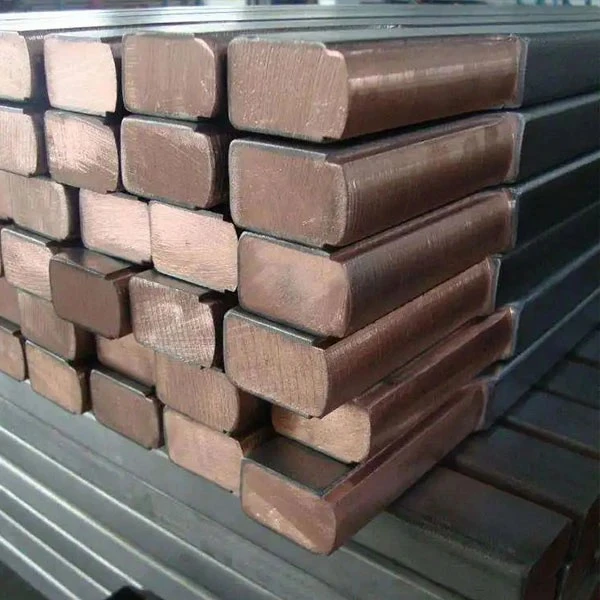
What This Product Solves
Next-generation EV power systems demand higher packaging density and higher voltage architectures. Traditional cable wiring inside Power Distribution Units (PDUs) inevitably leads to:
• Excessive voltage drop under continuous high-current loads.
• Complex and labor-intensive routing in increasingly confined enclosures.
• Elevated assembly error risks and inconsistency during mass production.
• Localized heat accumulation at termination points, compromising system safety.
Our High-Voltage PDU Busbars replace complex wire harnesses with a rigid, structured conductive system, delivering:
• A stable, ultra-low resistance power path minimizing power loss.
• A compact, repeatable internal architecture maximizing space utilization.
• Streamlined, error-free assembly to significantly reduce PDU production cycle time.
• Superior thermal dissipation and balance under severe, continuous loads.
This is not merely a component replacement-it is an architectural optimization for internal EV power distribution.
Application Position in EV Power Systems
Inside the EV PDU, our busbars serve as the heavy-duty backbone, safely routing and distributing high-voltage power across core subsystems:
- Main Fuse & Contactor Unit
- Traction Inverter (Motor Drive System)
- DC-DC Converter (Low-Voltage Auxiliary Supply)
- On-Board Charger (OBC Interface)
- Auxiliary HV Loads (Electric Compressor, PTC Heater, etc.)
A meticulously engineered PDU busbar directly impacts the overall system efficiency, thermal stability, and crash-safety packaging density of the entire EV platform.
Electrical Performance Engineering
Global Tier-1 suppliers and OEMs evaluate busbars based on stringent, measurable electrical parameters. Our designs focus on three core pillars:
Optimized Low-Resistance Path: Engineered cross-sectional areas reduce resistive losses, ensuring stable current distribution for both 400V and advanced 800V+ high-current EV architectures.
Advanced Thermal Mitigation: Eliminates localized hotspots common in dense cable clusters, supporting continuous, safe operation inside sealed, IP67/IP69K PDU enclosures. Fully compatible with liquid-cooled environments.
Controlled Inductance (Laminated Profiles): Specialized multi-layer laminated busbar structures significantly minimize stray inductance, reducing switching noise in inverter systems and improving EMI/EMC compliance in high-frequency EV environments.
Insulation & Automotive-Grade Safety Compliance
To guarantee long-term operational safety under extreme high-voltage conditions, our busbars feature robust insulation systems:
Premium Insulation Options: High-dielectric PET, Polyimide (PI) film lamination, or automated epoxy powder coating tailored to application specificities.
Flammability Rating: All insulation materials are certified to UL 94V-0 (Self-extinguishing).
Clearance & Creepage Optimization: Designed strictly in accordance with international automotive standards for 400V–1000V operating voltages to prevent arcing and tracking.
Environmental Resilience: Engineered to maintain high dielectric strength despite prolonged exposure to mechanical vibration, high humidity, and severe thermal cycling.
Mechanical Integrity & Lifetime Reliability
EV PDUs operate in harsh, high-vibration automotive environments. Our structural designs guarantee mechanical stability over the entire vehicle life cycle:
Custom Geometric Form Factors
Precision-engineered to fit seamlessly into compact, low-profile PDU housings.
Stress-Relief Architecture
Integrated flexible expansion joints or optimized terminal designs minimize mechanical stress on sensitive PCB/contactor connection joints.
Fatigue Resistance
Validated to withstand continuous automotive vibration profiles and differential thermal expansion.
Modular Compatibility
Ready-to-integrate designs aligned with modular EV platform and skateboard architectures.
Manufacturing Consistency & Quality Assurance
For global EV programs, batch-to-batch repeatability is paramount. Operating under an IATF 16949 certified quality management system, our production process guarantees aerospace-level precision at scale:
Precision Fabrication: High-speed CNC stamping, laser cutting, and multi-axis bending for tight dimensional tolerances.
Premium Metallurgy: Sourced high-purity copper (ETP/OF) or electrical-grade aluminum to ensure maximum conductivity.
100% In-Line Inspection: Every production batch undergoes automated optical inspection (AOI), 100% electrical continuity testing, and high-potential (Hi-Pot) dielectric withstand testing to verify insulation integrity.
Full Traceability: Complete material certifications and dimensional reports provided with every shipment.
Custom Co-Engineering & PPAP Support
Recognizing that every EV platform has distinct spatial, thermal, and electrical requirements, we offer comprehensive technical partnership:
CAD & Layout Integration: Seamless collaborative design integration directly into your 3D PDU layouts.
Simulation Support: Advanced electrical-thermal and finite element analysis (FEA) to predict current distribution and hotspots prior to tooling.
Material & Weight Optimization: Tailored material selection (Copper, Aluminum, or Hybrid solutions) to balance weight, cost, and conductivity.
Typical EV Applications
Our High-Voltage PDU Busbars are widely integrated into:
Battery Electric & Plug-in Hybrid Vehicles (BEV / PHEV passenger cars)
Electric Commercial Vehicles (Heavy-duty trucks, logistics vehicles, and e-buses)
High-Voltage Battery Management Systems (BMS) & Junction Boxes
Grid-Integrated Charging Infrastructure & High-Power Charging Stations
Next-Generation 800V Super-Fast Charging Platforms
FAQ
Q: Why are busbars preferred over wiring harnesses in EV PDUs?
A: Busbars provide lower resistance, better thermal control, and more compact internal layout compared to multi-wire harness systems.
Q: Can your busbars be used in 800V EV platforms?
A: Yes. Designs can be engineered for both 400V and 800V high-voltage architectures depending on insulation and spacing requirements.
Q: What is the main material used for PDU busbars?
A: Copper is the most common due to its conductivity, while aluminum or hybrid copper-aluminum structures are used for weight optimization.
Q: How do you ensure insulation reliability?
A: We use layered insulation systems such as PET film, epoxy coating, or heat shrink tubing, selected based on voltage and thermal requirements.
Q: Can the busbar be customized for my PDU structure?
A: Yes. We design based on your CAD files and electrical layout requirements to ensure mechanical and electrical compatibility.
Q: What tests are performed before shipment?
A: Electrical resistance testing, high-voltage dielectric testing, insulation resistance testing, and dimensional inspection are standard.
Q: Do busbars help reduce EMI in EV systems?
A: Yes. Especially laminated busbars, which reduce inductance and improve electromagnetic performance.
Q: What information is required for quotation?
A: We typically need CAD drawings, voltage level, current rating, installation space, insulation requirements, and application environment.
Hot Tags: ev high-voltage pdu busbar, China ev high-voltage pdu busbar manufacturers, suppliers, factory, busbar couplings, busbar lengths, car battery terminal connectors, Dip-Coated Highly Flexible Battery Jumper, indoor busbar, south american busbar market


